A personal lubricant is one of the simplest ways to make sex more comfortable. The research on lubricants does not point to a single brand. It points to a few properties that matter: what the lubricant is made from, whether it is safe with your condoms, how concentrated it is (osmolality) and how acidic it is (pH). This guide explains each one, then ranks four lubricants from our catalog against them. For other topics, start from our sexual health guides.
Lubricants are worth using. In a five-week double-blind diary study of 2,453 women, each assigned one of six water- or silicone-based lubricants, lubricant use was associated with higher ratings of sexual pleasure and satisfaction and was rarely associated with genital symptoms PMID: 21143591. A family-medicine review found lubricants especially helpful for people who use condoms or have dryness or pain during sex PMID: 40730448.
Silicone lube vs water-based vs oil
There are three main types of lubricant: water-based, silicone-based and oil-based PMID: 40730448.
| Type | What it is made from | Latex condoms | Main caution |
|---|---|---|---|
| Water-based | Water, thickening polymers, humectants such as glycerin, preservatives | Generally compatible | Many are highly concentrated (hyperosmolar); preservatives can irritate |
| Silicone-based | Silicone fluids, with no water | Generally compatible | Check the label: some are not compatible with polyurethane condoms |
| Oil-based | Mineral, plant or other oils, or petroleum jelly | Not compatible | Weakens latex and polyisoprene condoms |
Water-based lubricants are the most widely available. They contain water-soluble polymers, humectants such as glycerin or propylene glycol, and preservatives to stop microbial growth. Those preservatives can cause irritation and sensitization in some people, according to a WHO/UNFPA/FHI 360 advisory note on lubricants. In the diary study above, water-based lubricants were associated with fewer genital symptoms than silicone-based ones PMID: 21143591.
Silicone-based lubricants are made from silicone fluids, the same type of lubricant applied to most condoms during manufacture. The advisory note describes them as inert, with minimal effect on latex, though it adds that no published clinical studies support their use as personal lubricants, particularly with latex condoms for anal sex (WHO/UNFPA/FHI 360 advisory note). In laboratory testing of over-the-counter products, both silicone-based lubricants tested were among the safest for cells and tissue samples PMID: 23144863.
Oil-based products, including baby oil, coconut oil, petroleum jelly and body lotions, are the ones to avoid with condoms (see the next section). They may also affect vaginal health: in a cohort of 141 sexually active women in Los Angeles, those who used oils inside the vagina were more often colonized with Candida (44.4% vs 5%), and petroleum jelly use was linked to a 2.2 times higher risk of bacterial vaginosis PMID: 23635677. That was a small observational study, so it shows an association rather than cause.
Lubricant for condoms: what is safe with latex
This is the one rule that matters most. FDA's recommended labeling for latex condoms says: "If you add lubricant, use a water-based lubricant," and warns against oil-based lubricants such as petroleum jelly, mineral oil, vegetable oil or cold cream, "as these may damage the condom" (FDA latex condom labeling guidance). The damage is fast. In laboratory burst testing, as little as 60 seconds of exposure to mineral oil cut the strength of latex condoms by about 90%, while glycerol did not significantly affect them PMID: 2535978.
The condom material matters too. The WHO/UNFPA/FHI 360 advisory note says water- and silicone-based lubricants are generally accepted as compatible with natural rubber latex. It adds that polyisoprene condoms (a common latex-free option) are just as sensitive to oil as latex, while almost any lubricant proven safe for people can be used with polyurethane condoms (WHO/UNFPA/FHI 360 advisory note). If you also use a delay spray, our premature ejaculation guide covers what those labels say about condoms and partners, and our Promescent review looks at one spray's condom questions in detail. For choosing the condom itself, including latex-free options, see our condom guide.
Product labels can still differ from those general rules, so check each one. FDA's 510(k) records for the lubricants ranked below say:
- Wet Platinum: compatible with natural rubber latex, polyisoprene and polyurethane condoms (FDA 510(k) K130012).
- Good Clean Love Almost Naked: compatible with natural rubber latex, polyisoprene and polyurethane condoms (FDA 510(k) K150094).
- Überlube: compatible with natural rubber latex and polyisoprene condoms, but not polyurethane condoms (FDA 510(k) K151647).
- Hello Cake Hybrid: no FDA 510(k) record was found under the Hello Cake name, so there is no FDA record to check. The maker's Amazon listing (October 2026) says it is safe with natural rubber latex and polyisoprene condoms.
Lubricant osmolality: why concentration matters
Osmolality is a measure of how concentrated a liquid is. A lubricant that is far more concentrated than the body's own fluids is called hyperosmolar. Published figures for vaginal fluid vary a little (the two sources below give 260 to 290 and about 370 mOsm/kg), but both are far below most commercial lubricants. The WHO/UNFPA/FHI 360 advisory note gives the normal osmolality of vaginal secretions as 260 to 290 mOsm/kg and of semen as 250 to 380 mOsm/kg, yet says most commercial lubricants measure 2,000 to 6,000 mOsm/kg. It states that, ideally, a personal lubricant should not exceed 380 mOsm/kg, and as an interim limit recommends that procurement agencies buy lubricants of no more than 1,200 mOsm/kg. The main driver of osmolality in most lubricants is the amount of glycol, such as glycerin or propylene glycol (WHO/UNFPA/FHI 360 advisory note).
The laboratory evidence is consistent:
- In 2012 testing of over-the-counter lubricants, six of ten water-based gels were hyperosmolar. Those reduced tissue viability and caused the surface layer of the tissue to fracture and slough off, while two nearly iso-osmolar products (Good Clean Love and PRÉ) and both silicone-based products (including Wet Platinum) caused no significant changes. The researchers rated those four the safest in their testing PMID: 23144863.
- In a laboratory model of human vaginal tissue, all four lubricants above 1,500 mOsm/kg disrupted the tissue's deeper cell layers and reduced its barrier function, while lubricants below 400 mOsm/kg caused no such damage. The same paper measured healthy vaginal fluid at about 370 mOsm/kg PMID: 29854584.
- In a randomized study in 10 volunteers, a hyperosmolar gel applied rectally stripped away more of the lining of the lower bowel than an iso-osmolar version of the same gel PMID: 17262713. The advisory note suggests the effect of high osmolality may matter more for rectal use.
Most of this is laboratory evidence, not trials of comfort or infection in people. But when two products are otherwise similar, it is a reasonable tiebreaker. Few packages print osmolality. Wet Platinum's 510(k) summary says osmolality and pH do not apply to it because it contains no water (FDA 510(k) K130012).
Lubricant pH, yeast infections and bacterial vaginosis
The healthy vagina is acidic, with a pH normally between 3.8 and 4.5, while the rectum is closer to neutral (about pH 7). The WHO/UNFPA/FHI 360 advisory note says a high vaginal pH can increase the risk of bacterial vaginosis. It recommends a pH of around 4.5 for a lubricant intended for vaginal use, 5.5 to 7 for rectal use or when the use is unknown, and nothing above 7 (WHO/UNFPA/FHI 360 advisory note).
If you get recurrent vaginal infections or irritation, the family-medicine review recommends water- or silicone-based lubricants that are free of harmful ingredients and within recommended osmolality and pH ranges PMID: 40730448. Oils and petroleum jelly are best avoided anyway because of condoms, and small observational data hint at links with Candida and bacterial vaginosis PMID: 23635677. Any discharge, odor or itching that does not settle needs an exam rather than a different lubricant.
Best personal lubricant for sensitive skin
No study has identified one lubricant that suits every sensitive person, but the evidence points to a few practical steps:
- Keep it simple. The WHO/UNFPA/FHI 360 advisory note notes that preservatives in water-based lubricants can cause irritation, that warming lubricants often contain high levels of propylene glycol, and that the safety of lubricants with stimulating, tingling or herbal additives may not have been adequately assessed in high-risk groups such as sex workers (WHO/UNFPA/FHI 360 advisory note).
- Avoid spermicide lubricants. The same note says nonoxynol-9 has significant irritant effects and does not recommend it.
- Water-based may have a slight edge. In one large diary study, water-based lubricants were associated with fewer genital symptoms than silicone-based ones, though symptoms were rare with both PMID: 21143591. That is a single study, and silicone avoids the high osmolality of many water-based gels, so it is a trade-off rather than a rule.
- Prefer a lower-osmolality product, for the tissue reasons above PMID: 23144863.
As general guidance, stop using any product that stings or burns.
Best lubricant for vaginal dryness and menopause
Lubricants help with discomfort at the time of sex. The North American Menopause Society lists lubricants and moisturizers among effective treatments for genitourinary syndrome of menopause, and says non-hormonal products available without a prescription give enough relief for most women with mild symptoms PMID: 32852449. A lubricant does not treat the underlying tissue changes, though. For moderate to severe symptoms, NAMS recommends prescription options such as low-dose vaginal estrogen PMID: 32852449, and a moisturizer used on a schedule may ease ongoing mild dryness. Our guide to vaginal dryness during menopause explains how lubricants, moisturizers and vaginal estrogen differ.
Some products are sold as moisturizers for scheduled use even though FDA clears them as personal lubricants. Replens, for example, is marketed as a long-lasting vaginal moisturizer, and its 510(k) record lists an osmolality of 1,200 to 2,000 mOsm/kg (FDA 510(k) K203818), well above the advisory note's ideal of 380 mOsm/kg. For how it compares with a hyaluronic acid moisturizer, see Replens vs Revaree.
Does lubricant affect fertility?
If you are trying to conceive, the honest answer is that nobody knows for most products. A 2024 systematic review of 24 studies covering 35 over-the-counter lubricants found that only two studies looked at sperm in the body; the rest were laboratory studies. Methods varied, few reported pregnancy outcomes, and the authors concluded there is not yet enough evidence for a guideline on "sperm-safe" lubricants PMID: 38044638. If conception is the goal and you need a lubricant, ask your clinician which one to use.
Our lubricant rankings
Each rating starts from the evidence grade for lubricants as a class, then adjusts for practical factors. The methodology page explains the scale. Wet Platinum ranks first: the 2012 lab study named that product among the safest, and its 510(k) record lists compatibility with all three common condom materials. Good Clean Love Almost Naked and Überlube tie on rating. Almost Naked is listed second because it is the water-based option and its 510(k) record also lists all three condom materials; the lab study did not say which Good Clean Love variant it tested, so that result does not count toward its rating. The formulas tested in 2012 may differ from what is sold today.
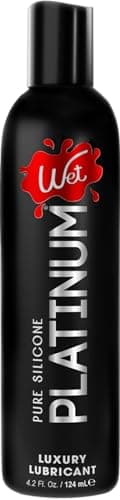
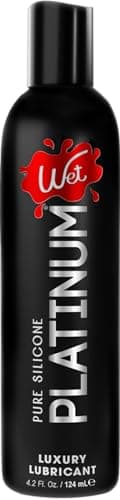
Wet Platinum Silicone Lubricant
Best For
Long-lasting glide at a low price, including with latex, polyisoprene and polyurethane condoms
Works In
Immediately
Price
$12.99
$3.09 / fluid ounce
Pros
- ✓Named among the safest products in a 2012 lab study of tissue and cell safety
- ✓Compatible with natural rubber latex, polyisoprene and polyurethane condoms per its FDA 510(k) record (K130012)
- ✓Its 510(k) summary says osmolality does not apply because it contains no water
Cons
- ✗The 2012 lab study tested the product sold then; the formula may have changed
- ✗Not tested in a clinical trial of its own
- ✗The lab study tested tissue samples, not comfort in people
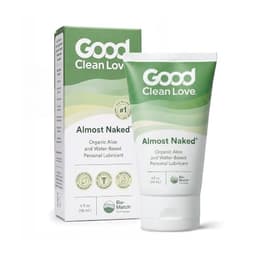
Good Clean Love Almost Naked
Best For
A water-based lubricant from a brand with near-iso-osmolar lab data
Works In
Immediately
Price
$14.99
$3.75 / fluid ounce
Pros
- ✓A Good Clean Love lubricant (variant not named) was nearly iso-osmolar and among the safest in 2012 lab testing
- ✓Compatible with natural rubber latex, polyisoprene and polyurethane condoms per its FDA 510(k) record (K150094)
- ✓Inexpensive
Cons
- ✗In 2012 lab testing a Good Clean Love product was named, but the variant was not
- ✗Not tested in a clinical trial of its own
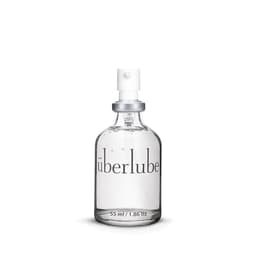
Überlube
Best For
Long-lasting, unscented silicone glide
Works In
Immediately
Price
$21.99
$11.82 / fluid ounce
Pros
- ✓Compatible with natural rubber latex and polyisoprene condoms per its FDA 510(k) record (K151647)
- ✓Unscented
Cons
- ✗Not compatible with polyurethane condoms, per its 510(k) record
- ✗Costs more per ml than the other picks
- ✗No independent lab or clinical data on this product
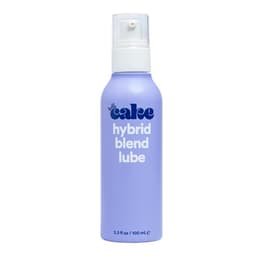
Hello Cake Hybrid Lubricant
Best For
Something between water-based and silicone glide, without fragrance
Works In
Immediately
Price
$12.99
$3.94 / fluid ounce
Pros
- ✓Fragrance-free, per the maker's Amazon listing (October 2026)
- ✓Safe with natural rubber latex and polyisoprene condoms, per the same listing
- ✓Inexpensive
Cons
- ✗No FDA 510(k) record found under the Hello Cake name, so its condom claims cannot be checked against one
- ✗No published osmolality or lab safety data
- ✗No study has tested this formula
Amazon prices retrieved from the Amazon Product Advertising API on . Prices and availability are accurate as of that time and may change.
Read the full reviews of Wet Platinum, Good Clean Love Almost Naked, Überlube and Hello Cake Hybrid.
Lubricant safety and when to see a clinician
Personal lubricants are generally regarded as low-risk products (WHO/UNFPA/FHI 360 advisory note). In the United States, FDA regulates them as Class II medical devices under the classification "Lubricant, Personal", reviewed through the 510(k) process, and its definition notes that a given product "may or may not be compatible" with latex, polyisoprene or polyurethane condoms (FDA product classification NUC). A 510(k) clearance means FDA found the product substantially equivalent to one already on the market (FDA 510(k) K130012). It is not a trial of comfort or of how well it works.
A few situations call for more than a new lubricant:
- Pain that persists even with plenty of lubricant deserves an exam, especially after menopause or after cancer treatment. Our vaginal dryness guide covers the causes and treatments.
- Any bleeding after menopause needs to be checked by a clinician, whatever the cause seems to be; our vaginal dryness guide explains why.
- Burning, itching, unusual discharge or sores after using a product: as general guidance, stop using it and see a clinician if symptoms do not clear.
- Condom breakage. If a condom breaks, ask a pharmacist or clinician about emergency contraception and whether testing for sexually transmitted infections makes sense.