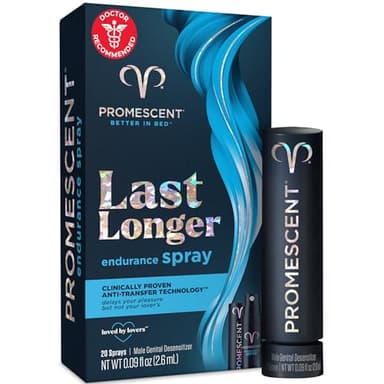
Premature ejaculation (PE) is a very common sexual concern, and it is treatable. Estimates of how many men it affects range from 3% to 20%, depending on the definition used PMID: 21833964. This guide explains how PE is defined, what can cause it, and what each treatment can and cannot do, from techniques you practise to sprays and prescription tablets. For other topics, start from our sexual health guides.
What counts as premature ejaculation
Lasting "not long enough" is not on its own a diagnosis. The International Society for Sexual Medicine (ISSM) definition has three parts PMID: 24848805:
- Short latency. Ejaculation always or nearly always happens within about 1 minute of vaginal penetration, from the first sexual experiences (lifelong PE), or there is a clinically significant, bothersome drop in latency, often to about 3 minutes or less (acquired PE).
- Little or no control. The inability to delay ejaculation on all or nearly all occasions of vaginal penetration.
- Negative consequences. Distress, bother, frustration or avoiding intimacy.
The same committee found that men with acquired PE tend to be older and have more erectile dysfunction, other illnesses and cardiovascular risk factors than men with lifelong PE PMID: 24848805. That difference matters, because acquired PE more often occurs alongside other conditions.
Premature ejaculation causes and treatment choices
Acquired PE often travels with other conditions. In a prospective study of 53 men with acquired PE, anxiety disorders, depression, erectile dysfunction and chronic prostatitis were all common, and the authors concluded they may play a role in causing it PMID: 31477853. Anyone whose timing has changed noticeably should mention it to a clinician, especially alongside erection problems, pelvic pain or urinary symptoms.
The American Urological Association and Sexual Medicine Society of North America (AUA/SMSNA) guideline recommends shared decision-making, ideally with the partner involved, and notes that psychological, behavioural and drug options all exist PMID: 34961344. A reasonable sequence is to start with techniques and an over-the-counter product, and to discuss prescription treatment with a clinician if those are not enough.
Behavioural techniques: stop-start and squeeze
The two classic techniques are simple. In the stop-start method, stimulation stops when you sense ejaculation approaching and resumes once the urge fades. The squeeze method adds firm pressure to the head of the penis during the pause. Both aim to build awareness of the point of no return, and trials have often combined them with sensate focus exercises PMID: 26468381.
The evidence is real but limited. A systematic review of 10 randomized trials (521 men) found that two trials of squeeze, stop-start and sensate focus reported ejaculatory latency 7 to 9 minutes longer than in men on a waiting list, while two others found no difference. Three trials found that adding behavioural therapy to drug treatment worked better than the drug alone, by a small margin (0.5 to 1 minute) PMID: 26468381. A Cochrane review judged the evidence for psychological treatments weak and inconsistent, and noted that the very high early success rates reported by Masters and Johnson were never replicated PMID: 21833964.
No adverse effects were reported in the trials reviewed, though safety data were limited PMID: 26468381, and the techniques cost nothing to try, so they are a reasonable first step and can be combined with other treatments.
Can Kegel exercises help with premature ejaculation?
Pelvic floor muscle training (Kegels) has been studied for PE, but only in small trials. A 2026 meta-analysis of five randomized trials with 236 men found that pelvic floor training or sphincter control training on its own improved ejaculatory latency less than dapoxetine or combined treatments did PMID: 42132359. Whether pelvic floor training alone helps is unclear, so treat Kegels as an add-on rather than a stand-alone fix. Our guide to Kegel exercises explains how to do them.
Premature ejaculation cream or spray: how topical anesthetics work
Topical anesthetics reduce sensitivity of the head of the penis, which delays ejaculation. They are among the best-supported PE treatments. An umbrella review of 44 meta-analyses rated the evidence that topical anesthetics lengthen time to ejaculation as moderate to high quality, one of only two treatment types to reach that rating (paroxetine was the other). They were also linked to more side effects than placebo, with a risk ratio of 4.1, and the review cautioned that only 6 of the 65 trials it covered had a low risk of bias PMID: 40326158.
The individual trials:
- Lidocaine-prilocaine spray (not FDA-approved in the US). In a European phase III trial of 300 men with lifelong PE, average ejaculatory latency rose from 0.6 minutes to 3.8 minutes with a metered lidocaine-prilocaine spray applied 5 minutes beforehand, compared with 1.1 minutes on placebo. Local side effects were reported by 2.6% of men and 3.1% of partners PMID: 19245438. A second phase III trial of 256 men in the US, Canada and Poland found a rise from 0.56 to 2.60 minutes, against 0.53 to 0.80 minutes on placebo PMID: 20584124.
- Lidocaine spray. In a small, single-blind, placebo-controlled trial of 150 men with lifelong PE, a 5% lidocaine spray applied 10 to 20 minutes before sex, then cleaned off, significantly improved ejaculatory latency and PE scores over 8 weeks PMID: 31896832.
- Head to head. In a randomized study of 273 men with lifelong PE (short-term, with no placebo group), lidocaine spray produced the largest gain in latency, followed by lidocaine-prilocaine (EMLA) cream, then benzocaine condoms. Side effects were lowest with the condoms PMID: 41144023.
In the US, lidocaine-prilocaine cream is a prescription product labeled for numbing skin and genital mucous membranes before minor procedures, not for PE (Lidocaine and Prilocaine Cream — DailyMed Drug Label). Using it for PE is off-label with evidence. Lidocaine sprays and benzocaine wipes such as Promescent's are sold over the counter: both are listed on DailyMed as OTC monograph drugs (Promescent lidocaine spray — DailyMed; Promescent Delay Wipes — DailyMed).
Delay spray vs wipes
Promescent sells both formats, and their labels differ:
| Promescent spray | Promescent Delay Wipes | |
|---|---|---|
| Active ingredient | Lidocaine, about 10 mg per spray | Benzocaine 7% |
| Label directions | 3 or more sprays, not more than 10, to the head and shaft 10 minutes before sex; start with 3; rub in until absorbed | Apply a small amount to the head and shaft before sex |
| After sex | Wash off | Wash off |
| Do not use if | You or your partner are allergic to lidocaine or topical anesthetics; your partner is or may be pregnant | Label lists no specific contraindication; stop if either partner gets a rash or irritation |
Sources: the spray label and the wipes label. The spray label also asks you to check with a doctor or pharmacist first if you have liver problems.
On the evidence, lidocaine has the edge. Lidocaine sprays have placebo-controlled trials, and in the head-to-head study benzocaine (in condom form) gave a smaller gain than lidocaine spray PMID: 41144023. No PubMed-indexed trial of benzocaine wipes was found for this guide, and neither Promescent product has been tested in a published controlled trial of its own (the spray's only published study was an uncontrolled diary study PMID: 27557610). Some men prefer a wipe to a spray; the spray lets you adjust the number of sprays.
Does delay spray work with condoms?
Neither Promescent label says anything about condoms. The spray's inactive ingredients include macadamia seed oil (spray label), and FDA's recommended labeling for latex condoms warns against oil-based lubricants "as these may damage the condom" (FDA latex condom labeling guidance). Whether the small amount in a delay spray affects condom strength has not been tested in any study cited here. Follow the label's instruction to rub the spray in until it is fully absorbed, but note that rubbing it in until absorbed does not establish condom safety. If you rely on condoms for contraception or infection protection, ask the maker about your condom type. Our lubricant guide explains which lubricants are safe with latex, polyisoprene and polyurethane condoms.
Some approaches pair an anesthetic with a condom: in an early pilot study, men applied lidocaine-prilocaine cream and then covered the penis with a condom PMID: 7658537, and benzocaine condoms, with the anesthetic built in, were one of the three options in the head-to-head study above PMID: 41144023.
Does delay spray affect your partner?
It can, if the anesthetic transfers. In the 300-man lidocaine-prilocaine spray trial, 3.1% of partners reported local side effects PMID: 19245438. The Promescent spray label says not to use it if your partner is or may be pregnant, and both Promescent labels say to stop if either partner develops a rash or irritation such as burning or itching (spray label; wipes label).
If you are trying to conceive, note that in a laboratory study Promescent reduced the motility and viability of sperm samples PMID: 29307732. That was a test-tube study, not a fertility trial, but it is worth discussing with your clinician.
Prescription options: SSRIs and dapoxetine in the USA
SSRIs (off-label with evidence). SSRI antidepressants can delay ejaculation as a side effect. The Paxil (paroxetine) label lists ejaculatory delay among SSRI sexual side effects, alongside lower libido and erectile dysfunction; PE is not one of its approved uses (Paxil (paroxetine) — DailyMed Drug Label). In the umbrella review, paroxetine produced the largest average gain of any drug, 5.64 minutes over placebo, and its evidence was rated moderate to high PMID: 40326158. A meta-analysis of 19 randomized trials found paroxetine more effective than placebo, fluoxetine and escitalopram PMID: 30606186. The AUA/SMSNA guideline states that none of the drug options for PE has FDA approval, so prescribing them for PE is off-label PMID: 34961344.
SSRIs are not trivial medicines. The Paxil label carries a boxed warning that antidepressants increased suicidal thoughts and behaviours in children and young adults in short-term studies, and warns about discontinuation symptoms such as dizziness, irritability and anxiety after stopping, particularly abruptly (Paxil label). A clinician should weigh these before prescribing.
Dapoxetine (not FDA-approved). Dapoxetine is a short-acting SSRI developed specifically for PE. The umbrella review describes it as the only SSRI approved for PE PMID: 40326158, but that approval is outside the US: as of October 2026 it has no FDA approval (a search of FDA's Drugs@FDA data on October 2, 2026 found no dapoxetine product), consistent with the AUA/SMSNA statement that no PE drug does PMID: 34961344. For context on the evidence only, a meta-analysis of 8 trials with 8,422 men found dapoxetine increased ejaculatory latency by about 1.7 minutes over placebo PMID: 32172793. This site does not recommend buying dapoxetine from overseas or online sellers.
Premature ejaculation and erectile dysfunction treatment
PE and erectile dysfunction (ED) often occur together. In a study of almost 2,400 men attending a clinic, about one in three men seeking help for either problem also reported the other. The authors concluded that when acquired PE and ED coexist, treating the ED first, or both together, is appropriate PMID: 34571325. Our erectile dysfunction guide covers causes and the checkup that ED deserves.
The PDE5 inhibitors sildenafil and tadalafil are FDA-approved for ED (Viagra (sildenafil) — DailyMed Drug Label; Cialis (tadalafil) — DailyMed Drug Label). For PE without ED, their use is off-label with evidence: a meta-analysis of 7 placebo-controlled trials (471 men) found they increased ejaculatory latency by about 2.6 minutes, with more headache, dizziness, flushing and nasal congestion than placebo PMID: 32375542. They are not safe for everyone; see the safety box below.
Can premature ejaculation be cured?
No treatment has been shown to fix PE permanently. Topical anesthetics act only when applied, and most drug trials followed men for months, not years: the umbrella review called for trials with longer follow-up to judge long-term results PMID: 40326158. Combining approaches may help: in three small trials, adding behavioural therapy to a drug lengthened latency by a further 0.5 to 1 minute compared with the drug alone, though the review rated the evidence as limited PMID: 26468381.
Ranking the over-the-counter delay products
Ratings start from each product's evidence grade and then adjust for practical factors; the methodology page explains the scale. The Promescent spray ranks first because lidocaine sprays have placebo-controlled trials. The wipes rank lower because benzocaine has less trial support.
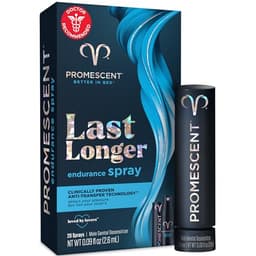
Promescent Delay Spray
Best For
Men who want the non-prescription option with the most trial evidence and an adjustable dose
Works In
Applied 10 minutes before sex, per the label
Price
$22.95
$255.00 / fluid ounce
Pros
- ✓Lidocaine: topical anesthetics rated moderate-to-high evidence in an umbrella review
- ✓Lidocaine sprays beat placebo and benzocaine condoms in randomized trials
- ✓Dose can be adjusted from 3 up to 10 sprays, per the label
Cons
- ✗No published controlled trial of Promescent itself
- ✗The label says not to use it if your partner is or may be pregnant
- ✗The label says nothing about condom compatibility
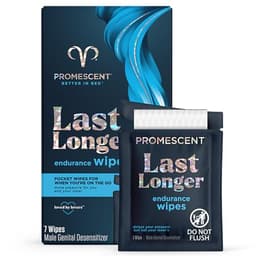
Promescent Delay Wipes
Best For
Men who prefer a wipe to a spray
Works In
Applied before sex, per the label
Price
$19.95
$2.85 / count
Pros
- ✓Wipe format, with no spray to dose
- ✓Only one inactive ingredient (propylene glycol), per the label
- ✓Topical anesthetics as a class lengthen time to ejaculation
Cons
- ✗No PubMed-indexed trial of benzocaine wipes found
- ✗Benzocaine gave a smaller gain than lidocaine in a head-to-head study
- ✗The label says nothing about condom compatibility
Amazon prices retrieved from the Amazon Product Advertising API on . Prices and availability are accurate as of that time and may change.
Read the full reviews of the Promescent spray and Promescent Delay Wipes. For the spray's evidence, partner and condom questions and cost per use in more depth, see our in-depth Promescent review.
Safety and when to see a clinician
Both Promescent labels note that PE may be due to a condition requiring medical supervision, and say to stop and see a doctor if the product does not help when used as directed. Keep sprays and wipes away from the eyes, do not use the spray on broken, irritated or sensitive skin, and stop if either partner develops a rash, burning or itching (spray label; wipes label).
See a clinician if:
- Your timing changed noticeably after years without a problem (acquired PE).
- You also have erection problems, pelvic pain, or urinary symptoms.
- PE is causing anxiety, low mood or strain in your relationship. Talking it through, ideally with your partner, is part of guideline care PMID: 34961344.
- Over-the-counter products and techniques have not helped after a fair trial.