Vaginal dryness is a common change of menopause, and one that people often do not raise with a clinician. It can make sex painful, make everyday life uncomfortable, and come with urinary symptoms. It is not something you have to put up with. This guide explains why it happens, what else can cause it, and how the three main treatments (lubricants, moisturizers and vaginal estrogen) differ. For other topics, start from our sexual health guides.
What genitourinary syndrome of menopause means
Doctors now call menopausal vaginal dryness part of genitourinary syndrome of menopause (GSM), a term that replaced "vulvovaginal atrophy" in 2014. GSM is a collection of symptoms and signs linked to falling estrogen and other sex hormones. It affects the vulva, vagina, urethra and bladder. Symptoms can include dryness, burning and irritation; lack of lubrication, discomfort or pain during sex; and urinary urgency, pain on passing urine or repeated urinary tract infections. The symptoms must be bothersome and not better explained by another diagnosis PMID: 25160739.
It is common. The North American Menopause Society (NAMS) estimates that GSM affects about 27% to 84% of postmenopausal women, and that it is likely underdiagnosed and undertreated PMID: 32852449. An international expert consultation identified vaginal dryness and pain with sex as its two most common symptoms, and described GSM as chronic and progressive PMID: 40981832.
Vaginal dryness causes beyond menopause
The underlying driver is low estrogen, and menopause is not the only thing that lowers it.
Vaginal dryness while breastfeeding
During breastfeeding, high prolactin levels suppress estrogen and androgen production, so the vaginal tissue changes in ways that resemble menopause. Researchers have proposed the term "genitourinary syndrome of lactation" for this, and note that there are no treatment guidelines yet PMID: 38757214. It is common: a systematic review of 65 studies estimated (with wide uncertainty) that 53.6% of breastfeeding people had vaginal dryness and 63.9% had signs of vaginal atrophy. Painful sex was reported by 60.0% at 3 months after birth, falling to 28.5% at 12 months PMID: 40373318. If you are breastfeeding, lubricants and moisturizers are a reasonable first step. Talk to a clinician before using any hormone product.
Vaginal dryness after cancer treatment and from certain medicines
Cancer treatment is a major cause. Treatments for hormone-sensitive cancers often bring on sudden menopause, and long-term endocrine therapy can make GSM symptoms worse PMID: 42224847. Aromatase inhibitors, a common hormone-blocking treatment after breast cancer, often cause vaginal dryness, itching, irritation and painful sex PMID: 31291563. If you are on these medicines, do not stop them because of dryness. Ask your oncology team. Non-hormonal moisturizers and lubricants are the usual first step, and any decision about vaginal estrogen should be made jointly with your oncologist PMID: 31291563.
Vaginal dryness after hysterectomy and ovary removal
A hysterectomy removes the uterus. Surgery that also removes the ovaries brings on menopause straight away. In a meta-analysis of women at high genetic risk of breast or ovarian cancer who had both ovaries and fallopian tubes removed to lower their cancer risk, vaginal dryness increased significantly after surgery, and hormone therapy did not abolish the decline in sexual function PMID: 34416580. If you are planning surgery that includes your ovaries, ask about these effects beforehand.
Vaginal dryness from birth control
Some people report vaginal dryness as a side effect of the contraceptive pill, but the evidence here is weaker. In a survey of 2,171 women, those who reported genital side effects of the pill, including vaginal dryness, were more likely to have a diagnosis of vulvodynia (chronic vulvar pain). The study was cross-sectional and recruited through social media, so it cannot show that the pill caused either problem PMID: 40751589. If dryness or pain started after a new contraceptive, raise it with your prescriber. Another method may suit you better.
Vaginal moisturizer vs lubricant vs vaginal estrogen
These three are often confused, but they do different jobs.
| Option | How it is used | Best for | Prescription? |
|---|---|---|---|
| Lubricant | Applied just before or during sex | Friction and pain during sex | No |
| Vaginal moisturizer | Used on a regular schedule, not tied to sex | Ongoing mild dryness | No |
| Vaginal estrogen | Low-dose cream, insert or ring, used on a schedule | Moderate to severe GSM | Yes (FDA-approved) |
NAMS recommends non-hormonal products available without a prescription as enough for most women with mild symptoms, and low-dose vaginal estrogen, vaginal DHEA, systemic estrogen therapy and ospemifene for moderate to severe GSM PMID: 32852449.
Lubricants
A lubricant reduces friction during sex. A family-medicine review found lubricants especially helpful for people with dryness or pain during sex and for condom users. For anyone who uses condoms or gets recurrent vaginal infections or irritation, it recommended water- or silicone-based products that are free of harmful ingredients and within recommended osmolality and pH ranges PMID: 40730448. Check each product's own condom guidance too, and see our guide to the best personal lubricants for how water-, silicone- and oil-based products compare. In a five-week double-blind diary study of 2,453 women assigned one of six water- or silicone-based lubricants, lubricant use was linked to higher sexual pleasure and satisfaction and was rarely associated with genital symptoms PMID: 21143591.
Ingredients matter. In laboratory testing of over-the-counter lubricants, very concentrated (hyperosmolar) water-based gels damaged cells and tissue samples, while two products close to the body's own concentration and both silicone-based products tested were the safest. One of those was a Good Clean Love lubricant; the study did not say which variant PMID: 23144863. That was a lab study, not a trial in people, but it is a reasonable tiebreaker if you want a lower-osmolality product.
Vaginal moisturizers, including hyaluronic acid
A vaginal moisturizer is used every few days whether or not you are having sex, to keep the tissue more comfortable. Replens Long-Lasting Vaginal Moisturizer (FDA 510(k) K203818) and Revaree Plus Vaginal Suppositories (FDA 510(k) K213220) are both cleared under the device classification "Lubricant, Personal" (FDA product classification NUC). They are medical devices, not drugs, and they contain no hormones. They also differ on condoms: the Replens record says it is compatible with natural rubber latex and polyisoprene condoms but not polyurethane ones, while Revaree Plus was not tested for condom compatibility, and FDA's record lists it as not compatible with natural rubber latex, polyurethane and polyisoprene condoms.
The evidence for moisturizers is mixed. A 2024 systematic review for the Agency for Healthcare Research and Quality concluded that vaginal moisturizers may improve dryness, with low certainty, and that few long-term data exist for any GSM treatment PMID: 39250810. Hyaluronic acid has placebo-controlled data: a 2026 meta-analysis that included three placebo-controlled randomized trials found it improved dryness-related quality of life and sexual function compared with placebo, with moderate-certainty evidence PMID: 41773428. But in a 53-woman trial, a hyaluronic acid gel added no benefit over a polycarbophil gel (the Replens-type base), so the cheaper product may do as well. That trial was small and open-label, and two of its authors listed a pharmaceutical company affiliation PMID: 35131532.
Vaginal estrogen
Low-dose vaginal estrogen is a prescription treatment, and it is FDA-approved for this use. The Vagifem label lists treatment of atrophic vaginitis due to menopause (Vagifem (estradiol) — DailyMed Drug Label). The Estring label lists moderate to severe symptoms of vulvar and vaginal atrophy due to menopause (Estring (estradiol) — DailyMed Drug Label). It comes as creams, small vaginal inserts and a vaginal ring.
A Cochrane review of 30 randomized trials (6,235 women) found low-quality evidence that vaginal estrogen improves symptoms compared with placebo, and no difference in effectiveness between creams, tablets and the ring PMID: 27577677. The 2024 systematic review reached a similar conclusion: vaginal estrogen may improve dryness, painful sex and treatment satisfaction, with low certainty PMID: 39250810. The review noted that most trials lasted 12 weeks or less and used varied criteria and outcome measures, so the low certainty reflects the limits of the studies rather than evidence that vaginal estrogen does not work PMID: 39250810.
Replens vs vaginal estrogen: what the trials show
Several trials have tested Replens against vaginal estrogen, most of them small.
- Breast cancer survivors. In a 23-woman open-label randomized trial in women taking aromatase inhibitors, vaginal estrogen (an insert or a ring) improved dryness and painful sex more than Replens over 24 weeks, a difference that was only just statistically significant. Blood estradiol stayed low in most participants. The authors called for larger, longer studies PMID: 42530772.
- Postmenopausal women. In a 12-week trial of 302 women with moderate to severe symptoms, a 10 mcg vaginal estradiol tablet and a vaginal moisturizer were each compared with a placebo gel, and neither did better than placebo. All three groups improved by a similar amount PMID: 29554173. One possible reading is that regular use of any gel helps, though the trial was not designed to show that. Pain during penetration was the most bothersome symptom for 60% of participants. The full text names the moisturizer as Replens (MsFLASH trial full text).
- Estrogen creams. Two small trials from the 1990s compared Replens with an estrogen cream. In a 39-woman randomized trial, a dienoestrol cream improved a vaginal dryness index more than Replens, while itching, irritation and painful sex improved similarly with both PMID: 8794418. In a 30-woman open-label study, Replens and a local estrogen cream both improved vaginal moisture and elasticity over 12 weeks PMID: 8293835.
The practical takeaway: a moisturizer is a sensible, low-cost first step for mild dryness, as NAMS suggests. If it does not help enough, or symptoms are moderate to severe, NAMS recommends prescription options such as low-dose vaginal estrogen PMID: 32852449, so it is worth discussing with a clinician.
Other prescription options
Two non-estrogen prescription medicines are also FDA-approved for menopausal symptoms in this area:
- Prasterone (Intrarosa) is a vaginal DHEA insert approved for moderate to severe pain during sex due to menopause (Intrarosa (prasterone) — DailyMed Drug Label).
- Ospemifene (Osphena) is a daily tablet, an estrogen agonist/antagonist, approved for moderate to severe pain during sex and moderate to severe vaginal dryness due to menopause. Its label carries a boxed warning about endometrial cancer and cardiovascular disorders (Osphena (ospemifene) — DailyMed Drug Label).
The 2024 systematic review found that both may improve dryness and painful sex compared with placebo, with low certainty PMID: 39250810.
Painful sex after menopause
Pain during sex is often what brings people to treatment. It was the most common "most bothersome symptom" in the large trial above PMID: 29554173. A lubricant helps in the moment. Treating the underlying tissue changes with a moisturizer or vaginal estrogen helps over weeks. Pain that persists despite treatment, or pain deep in the pelvis, deserves an exam, because GSM is diagnosed only when another condition does not better explain the symptoms PMID: 25160739. For whether pelvic floor exercises or a pelvic floor trainer can help, see our guide to pelvic floor trainers. If pain has also dampened your interest in sex, our guide to low libido in women covers other causes of low desire and how it is treated.
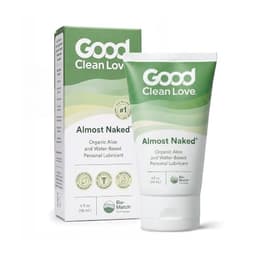
Good Clean Love Almost Naked
Best For
A condom-compatible lubricant for discomfort during sex
Works In
Immediately (used at the time of sex)
Price
$14.99
$3.75 / fluid ounce
Pros
- ✓A Good Clean Love lubricant (variant not named) was nearly iso-osmolar and among the safest in 2012 lab testing
- ✓Compatible with latex, polyisoprene and polyurethane condoms per its FDA 510(k) record
- ✓FDA 510(k) K150094
Cons
- ✗A lubricant only: it does not treat ongoing dryness between times
- ✗Not tested in a clinical trial of its own
- ✗The lab study tested safety in tissue samples, not comfort in people
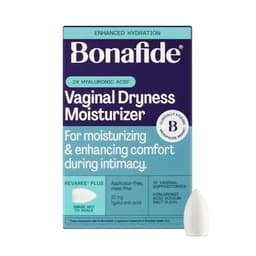
Revaree Plus
Best For
Hormone-free moisturizing with placebo-controlled class evidence
Works In
Used on a regular schedule
Price
$70.00
$7.00 / count
Pros
- ✓Hyaluronic acid improved dryness-related quality of life versus placebo in a meta-analysis of randomized trials
- ✓Hormone-free
- ✓FDA 510(k) K213220 (cleared as a personal lubricant device)
Cons
- ✗Several times the price of a polycarbophil moisturizer
- ✗No published trial of Revaree Plus by name; one small pilot funded by Bonafide, which sells it, tested a 5 mg hyaluronic acid insert
- ✗Not tested for condom compatibility; its 510(k) record (K213220) lists it as not compatible with natural rubber latex, polyurethane and polyisoprene condoms
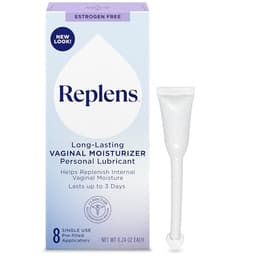
Replens Long-Lasting Vaginal Moisturizer
Best For
A low-cost, hormone-free first step for mild ongoing dryness
Works In
Used on a regular schedule
Price
$12.98
$1.62 / count
Pros
- ✓Inexpensive and widely available
- ✓Hormone-free
- ✓FDA 510(k) K203818 (cleared as a personal lubricant device)
Cons
- ✗Trial results are mixed: a moisturizer did no better than a placebo gel in a 302-woman trial
- ✗Vaginal estrogen beat it in a small trial in breast cancer survivors
- ✗Replens was toxic to Lactobacillus bacteria in a 2012 lab study (formula not specified; not tested in people)
- ✗A scheduled-use moisturizer rather than a lubricant for sex, and hyperosmolar (1200 to 2000 mOsm/kg per its 510(k) record)
Amazon prices retrieved from the Amazon Product Advertising API on . Prices and availability are accurate as of that time and may change.
Replens is marketed as a long-lasting moisturizer for scheduled use, even though FDA clears it as a personal lubricant. Its 510(k) record lists an osmolality of 1200 to 2000 mOsm/kg (FDA 510(k) K203818), well above the 380 mOsm/kg that a WHO/UNFPA/FHI 360 advisory note gives as the ideal ceiling for a personal lubricant.
Read the full reviews of Replens, Revaree Plus and Good Clean Love Almost Naked, or see how the two moisturizers compare head to head in Replens vs Revaree.
Can vaginal dryness cause bleeding? When to see a clinician
Do not put bleeding down to dryness without an exam. Bleeding after menopause has many harmless causes, but it is also the main warning sign of endometrial cancer. A meta-analysis of 129 studies found that 91% of women with endometrial cancer had postmenopausal bleeding, and about 9% of women with postmenopausal bleeding had endometrial cancer PMID: 30083701. Most will not, but everyone needs to be checked.
See a clinician if:
- You have any bleeding or spotting after menopause, including after sex.
- Over-the-counter products have not helped enough after several weeks of regular use.
- You have unusual discharge, odor, sores or itching. GSM is diagnosed only when another condition does not better explain the symptoms, so these need an exam PMID: 25160739. If an infection is possible, our guide to at-home STD tests explains what home tests can and cannot check.
- You have urinary urgency, pain on passing urine or repeated urinary infections, which can be part of GSM PMID: 25160739.
- You have had breast or gynecological cancer, or take hormone-blocking medicine, and want to discuss treatment.
Is vaginal estrogen safe?
For most postmenopausal women, the long-term data are reassuring. In the Nurses' Health Study, women followed for 18 years had no higher risk of cardiovascular disease, cancer or hip fracture with vaginal estrogen use than without it PMID: 30562320. In the Women's Health Initiative Observational Study (45,663 women), risks of stroke, invasive breast cancer, endometrial cancer and blood clots were not higher in vaginal estrogen users with a uterus PMID: 28816933. NAMS notes that a progestogen is not needed with low-dose vaginal estrogen, though endometrial safety has not been studied in trials longer than a year PMID: 32852449.
About the boxed warning. Many vaginal estrogen labels have carried a boxed warning on endometrial cancer, cardiovascular disorders, probable dementia and breast cancer. Its cardiovascular and dementia findings come from Women's Health Initiative trials of daily oral hormone tablets, and the Vagifem label itself says that the relevance of those findings to lower doses and other routes of administration is not known (Vagifem (estradiol) — DailyMed Drug Label). In November 2025, FDA asked manufacturers of all menopausal hormone therapies to remove the cardiovascular, breast cancer and dementia language from the boxed warning. It kept the endometrial cancer boxed warning only for systemic estrogen-alone products, and asked for local vaginal product labels to be condensed around the information most relevant to them (FDA labeling change request, November 2025). Updated labels are rolling out product by product. The current Estring label, for example, no longer has a boxed warning, but it still says to investigate unexplained genital bleeding (Estring (estradiol) — DailyMed Drug Label).
After breast cancer. The Estring label lists known or suspected estrogen-dependent cancer as a contraindication (Estring (estradiol) — DailyMed Drug Label), and NAMS says there are not yet enough data to confirm vaginal estrogen's safety in women with breast cancer PMID: 32852449. A large US claims analysis found no increase in breast cancer recurrence within five years among women who used vaginal estrogen PMID: 37535961. This is a decision to make with your oncologist, not on your own.