A vacuum erection device (VED) is a drug-free, non-surgical treatment for erectile dysfunction. Most devices are sold over the counter, and the American Urological Association says men with ED should be told about it as a treatment option. It is also easy to misunderstand: it is not "FDA approved", its safety rules matter more than most buyers realize, and its role after prostate surgery is more nuanced than marketing suggests. This guide covers how a VED works, what the evidence says about success rates, its use after prostatectomy, side effects and safety limits, Medicare coverage, and the two devices in this site's catalog. For the causes of ED and every other treatment, start with our erectile dysfunction guide.
How a vacuum erection device works, and how to use one
A VED has three parts: a clear plastic cylinder that fits over the penis, a pump (hand-operated or battery-powered) that removes air from the cylinder, and a constriction ring, also called a tension or retaining ring. The negative pressure inside the cylinder draws blood into the erectile tissue. A ring slid onto the base of the penis then keeps the blood from draining away, so the erection lasts after the cylinder is removed. Used without a ring, the same vacuum simply brings oxygenated blood into the penis, which is the basis for its use in rehabilitation after prostate surgery PMID: 20410903.
In outline, use follows the same steps for most devices: load a ring onto the open end of the cylinder, place the cylinder against the body, pump gradually until an erection forms, slide the ring off the cylinder onto the base of the penis, release the vacuum and remove the cylinder. Remove the ring within 30 minutes. FDA's labeling guidance for these devices tells makers to provide full, illustrated instructions on sizing, placing, operating, removing and cleaning the device, and recommends using only the minimum vacuum pressure needed and the least constrictive ring that maintains an erection (FDA special controls guidance, external penile rigidity devices). Read your own device's instructions first; they take priority over any general outline.
Expect a learning period. A review of vacuum therapy advised that men should receive individual instruction and expect a practice period before getting the best results PMID: 9066099. In a single-group Veterans Affairs program that gave 57 men comprehensive education, training and follow-up, more than 96% of those who answered said they could maintain an erection with the device and all said they would recommend it, although 23% reported physical discomfort, often from the constriction bands PMID: 33012263.
Do vacuum erection devices really work? Success rates
The best recent summary is a 2025 meta-analysis of 18 studies with 1,065 men whose ED was refractory, meaning it often had not responded to PDE5 tablets such as sildenafil or tadalafil. The pooled success rate, defined as successful intercourse or satisfaction with intercourse, was 0.80 (95% confidence interval 0.76 to 0.84), or about 80%. Success rates by cause were 82.9% for mixed causes, 73.0% for diabetes, 71.8% for spinal cord injury and 84.5% after radical prostatectomy PMID: 40542251. The authors concluded that a VED is an effective adjunct for refractory ED, and called for large randomized trials with standardized measures and longer follow-up.
The American Urological Association (AUA) guideline says men with ED should be informed about the vacuum erection device as a treatment option, including its benefits and risks or burdens (a Moderate Recommendation, Evidence Level Grade C) PMID: 29746858. Its evidence review found that of 28 studies reporting a success rate, 19 reported rates of 75% or higher. It also cautioned that more than 90% of the study arms were observational, that most studies predate both PDE5 tablets and today's validated questionnaires, and that dropouts complicate interpretation because only successful users kept using the devices. It noted that some studies suggest more men prefer PDE5 tablets when they have a choice (AUA erectile dysfunction guideline, statement 13).
So the honest answer is that VEDs work for many men, including many for whom tablets have failed, but the evidence is moderate rather than strong, and success rates are partly inflated by dropouts. Treat maker claims with care: Encore's website says its system has "a sucess [sic] rate of OVER 95% and with NO SIDE EFFECTS", and that it has "NO Contraindications" (Encore, What makes us different, viewed October 3, 2026), and Timm Medical's FAQ says VEDs "are 90% effective in creating an erection" (Timm Medical FAQ, viewed October 3, 2026). The pooled 80% figure and a bruising rate of about 24% in the same meta-analysis are the better guide PMID: 40542251.
Vacuum erection device after prostatectomy
Erectile dysfunction is a common and distressing consequence of radical prostatectomy PMID: 42557727, and a VED is used in two different ways: to treat ED, by producing an erection for intercourse with a ring, and as "penile rehabilitation", daily use without a ring that aims to keep the tissue healthy while nerves recover. The evidence for each is different.
As a treatment. In the 2025 meta-analysis, the pooled rate of successful intercourse or satisfaction with a VED was 84.5% in men after radical prostatectomy PMID: 40542251. In a trial of 109 men with ED after surgery, randomized to daily VED use for 9 months or observation without treatment, 80% of the device group (60 of 74) used it with a ring for intercourse about twice a week. About 18% stopped after a mean of 3 months. At 9 months, 10 of the 60 men using the device for intercourse (17%) had natural erections sufficient for intercourse, compared with four of the 35 men in the observation group; counted over all 74 men assigned to the device, that is 10 men (14%). Natural erections of any quality returned at similar rates (19 of 60 device users against 13 of 35 controls), and the abstract reports no significance test for the difference PMID: 16107868.
As rehabilitation. Small randomized trials report encouraging results. In a pilot trial of 28 men, those who began using a VED one month after nerve-sparing surgery, for 10 minutes a day without a ring, had higher erectile function scores at 3 months than men who started at 6 months, and kept their stretched penile length, whereas the later group lost about 2 cm at 3 and 6 months PMID: 17822466. In a trial of 100 men with normal erectile function before nerve-sparing surgery, once-daily tadalafil 5 mg combined with a VED improved erectile function scores at 6 and 12 months, and VED use alone or combined helped maintain penile length PMID: 34975069. A 2024 scoping review of 16 studies, seven of them randomized, found that all reported better erectile function scores, preserved penile length and more satisfactory intercourse than controls, and that results appeared better in programs designed to help men keep using the device PMID: 37085734.
Combinations. A 2026 network meta-analysis of 41 studies (4,157 men) found that combination therapies were most effective after prostatectomy: tadalafil plus a VED had an odds ratio of 12.3 for recovery of erectile function compared with placebo, behind only tadalafil plus intraurethral alprostadil. The overall certainty of evidence was low to very low PMID: 42557727. Tadalafil is an FDA-approved prescription ED tablet (Cialis (tadalafil) — DailyMed Drug Label); whether and when to combine it with a device after surgery is a decision for your urologist.
The caveats. Expert bodies are more cautious than the individual trials. The International Consultation on Sexual Medicine concluded that VEDs are effective at creating an erection satisfactory for intercourse, even in hard-to-treat groups, and might be used after prostatectomy to maintain penile length, but that there is insufficient evidence for them as a penile rehabilitation therapy PMID: 27770853. A 2017 meta-analysis found that rehabilitation with PDE5 tablets, VEDs or injections improved erectile function during treatment, but that PDE5 rehabilitation did not improve spontaneous erections once the drug was stopped PMID: 29122494. The AUA guideline, interpreting mainly the PDE5 tablet trials, concludes that erectile function rehabilitation protocols tested to date remain unproven, and that for VEDs, small numbers and missing control groups mean more mature data are needed (AUA erectile dysfunction guideline) PMID: 29746858.
In practice: a VED is a reasonable option after surgery. It produced device-assisted erections for intercourse in about 85% of men in pooled studies PMID: 40542251, and it may help preserve length. Whether it speeds the return of natural erections is not proven. Follow your urologist's protocol for timing and frequency. For pelvic floor exercises after prostate surgery, which have their own mixed evidence, see our guide to pelvic floor trainers.
Is a vacuum erection device FDA approved?
No. Vacuum erection devices are not FDA-approved and, as a category, not FDA-cleared. FDA classifies vacuum pumps, constriction rings and penile splints as external penile rigidity devices: Class II, product code LKY, regulation number 21 CFR 876.5020, and exempt from 510(k) premarket notification (FDA product classification LKY).
Being exempt does not mean being unregulated. To market a device without a 510(k), makers are expected to follow FDA's special controls guidance, issued on December 28, 2004, or equivalent measures. The guidance sets out design features (for example, rings should not have design features that promote use beyond 30 minutes) and detailed labeling, including the warnings described in the safety section below. The same guidance notes that these are over-the-counter devices, though they are often used in consultation with a physician (FDA special controls guidance, external penile rigidity devices).
"Medical grade" is a marketing term: FDA's classification for these devices is external penile rigidity device, with no "medical grade" tier (FDA product classification LKY). A more useful check comes from the AUA, which says only VEDs that contain a vacuum limiter, a feature that limits the vacuum pressure and reduces the risk of injury, should be used, whether bought over the counter or on prescription (AUA erectile dysfunction guideline, statement 13). Before you buy any device, confirm with the seller or maker that it has one.
Vacuum erection device side effects
Most side effects are minor. In the 2025 meta-analysis, penile bruising was the most common, with a pooled incidence of 24.3%, and men with spinal cord injury may be at higher risk (31.4%) PMID: 40542251. The AUA's evidence review reported these average rates across studies PMID: 29746858 (AUA erectile dysfunction guideline, statement 13):
| Side effect | Studies reporting it | Mean rate (range) |
|---|---|---|
| Small red spots (petechiae) or bruising | 16 | 17.7% (0 to 50%) |
| Discomfort or pain | 17 | 18.2% (0 to 64%) |
| Difficulty with ejaculation | 9 | 21.6% (3.4 to 40%) |
| Difficulty using the device | 10 | 19.8% (0 to 66.6%) |
| Loss of sensitivity | 7 | 14.5% (3.2 to 45%) |
The AUA notes that most of these were minor and resolved without intervention. Timm Medical's troubleshooting advice adds that the penis may feel cold while a ring is on, which it describes as a normal response to reduced blood flow, and that ejaculation, if it occurs, will most likely happen after the ring is removed (Timm Medical FAQ, viewed October 3, 2026).
Serious injuries are rare. A case series of five men described a man with diabetes and nerve damage who developed skin necrosis (tissue death) at the ring site after leaving the ring on for 6 hours; other unusual complications, such as urethral bleeding, occurred in men using the device correctly PMID: 9586618. FDA also recommends warning men with decreased pain sensation in the penis not to use the device, because a man who cannot feel pain may not know whether he is being injured (FDA special controls guidance, external penile rigidity devices).
Safety rules: the 30-minute ring limit and who should check first
The ring limit. FDA's labeling guidance tells makers to warn users to limit use of the constriction ring to no longer than 30 minutes per use, flagged as a boxed or more prominent precaution, because prolonged use may cause permanent injury. It also recommends warnings to allow at least 60 minutes between uses, never to fall asleep with a ring on, not to use the device under the influence of alcohol or drugs, and to stop using the pump if pain occurs (FDA special controls guidance, external penile rigidity devices). The makers of both devices reviewed here say the same:
- Encore: "The Retaining Ring should be worn for no more than 30 minutes. After the ring is removed, please wait 1 hour before creating another erection." (Encore FAQ, viewed October 3, 2026)
- Timm Medical: "Limit each use of the constriction rings to 30 minutes, as prolonged use of the ring may cause permanent injury to the penis." (Timm Medical Important Safety Information, viewed October 3, 2026)
Who should check with a clinician first. FDA's labeling guidance recommends a warning not to use a vacuum pump with sickle cell disease, a history of prolonged erections, or large quantities of aspirin or other blood thinners, because these increase the risk of bruising and bleeding under the skin (hematoma). It also recommends warnings against using the device with decreased sensation of pain in the penis, or with decreased hand strength, because that can make removal difficult, and notes that a VED may aggravate Peyronie's disease, priapism or urethral strictures (FDA special controls guidance, external penile rigidity devices). The AUA says men on anticoagulant therapy, with bleeding disorders, or with a history of priapism should use VEDs with caution (AUA erectile dysfunction guideline, statement 13) PMID: 29746858. If you have sickle cell disease, a history of prolonged erections, decreased pain sensation in the penis or decreased hand strength, or take large quantities of aspirin or other blood thinners, FDA's labeling guidance and Timm Medical's safety information say not to use a vacuum device. Timm Medical also says men with a bleeding disorder, or who bruise easily, should not use one (Timm Medical Important Safety Information, viewed October 3, 2026). For the other conditions above, such as Peyronie's disease, urethral strictures or other anticoagulant use, talk to your clinician before trying one. If you have a penile implant, Timm Medical says to consult your physician before using one.
Get a checkup first. FDA recommends that labeling advise men with ED to consult a physician before using a device, to avoid delaying the diagnosis of an underlying cause such as diabetes (FDA special controls guidance, external penile rigidity devices). ED is linked to a higher risk of later cardiovascular disease PMID: 21920268, which our erectile dysfunction guide explains. Two further points from the same FDA guidance: constriction rings do not prevent pregnancy, and electrically powered pumps should not be used in or near water.
Osbon ErecAid vs Pos-T-Vac: what the brand names mean
Many shoppers compare the Osbon ErecAid and Pos-T-Vac names. Both are now sold by Timm Medical, whose site lists Osbon ErecAid and Pos-T-Vac instructions side by side (Timm Medical product instructions, viewed October 3, 2026) and states that "All VED systems and accessories are manufactured and distributed by Pos-T-Vac Medical." Its PTV Automatic 3000 is listed as "Formerly the Pos-T-Vac BOS-3-SLIP" (Timm Medical PTV Automatic 3000, viewed October 3, 2026). The only brand comparison found in a PubMed search for this guide (October 3, 2026) is from 1991: 30 men tried seven commercial systems, including the Osbon ErecAid and Pos-T-Vac, and regular users rated the Mentor Response, Osbon ErecAid and Mentor-Piston highest for ease of use PMID: 1755139. Those models predate today's, so the useful evidence is the class evidence above. The practical differences are price, manual or battery pump, ring designs, and whether the device has a vacuum limiter. Only the Timm PTV 3000 from this family is in this site's catalog.
Looking for a "medical-grade" vacuum erection device? The two reviewed here
This site's catalog includes two VEDs, both sold on Amazon by their makers. A PubMed search for this guide (October 3, 2026) found no trials of either specific product, so both share the device-class evidence grade (B, moderate). Prices are from Amazon on October 3, 2026.
| Encore Deluxe | Timm Medical PTV 3000 | |
|---|---|---|
| Pump | Manual and battery pumps both included | Battery pump with a safety release valve |
| Ring limit (maker) | No more than 30 minutes; wait 1 hour before another use | Limit each use to 30 minutes |
| Price | About $125 | About $399 |
| Seller on Amazon | Encore, Inc. | Timm Medical |
A battery pump is a convenience, not a fix for weak hands. FDA's labeling guidance and Timm Medical's own safety information both say men with decreased hand strength should not use a vacuum device, because, as FDA explains, removing it can be difficult (FDA special controls guidance, external penile rigidity devices; Timm Medical Important Safety Information, viewed October 3, 2026).
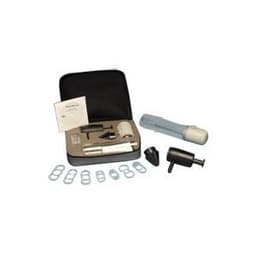
Encore Deluxe Vacuum Therapy System
Best For
Men who cannot take or did not respond to PDE5 tablets, or whose urologist recommends a device
Works In
Used at the time of sex; expect practice sessions at first
Price
$125.00
$7.81 / ounce
Pros
- ✓Vacuum devices as a class: about 80% success for intercourse or satisfaction in men with hard-to-treat ED across 18 studies
- ✓Includes both a manual and a battery pump
- ✓Drug-free and reusable
Cons
- ✗Penile bruising in about a quarter of users in pooled studies
- ✗The maker's site claims a success rate over 95% with no side effects, which the evidence does not support
- ✗No trials of the Encore brand itself
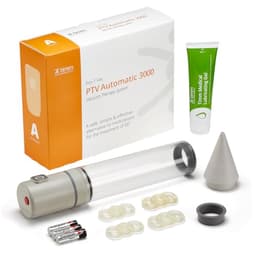
Timm Medical PTV 3000
Best For
Men who would rather press a button than pump by hand
Works In
Used at the time of sex; expect practice sessions at first
Price
$399.00
$399.00 / count
Pros
- ✓One-button battery pump
- ✓Same device-class evidence as manual vacuum devices
- ✓Drug-free and reusable
Cons
- ✗About three times the price of the Encore Deluxe, which also includes a battery pump
- ✗The maker says not to use it with decreased hand strength or decreased pain sensation in the penis
- ✗Penile bruising in about a quarter of vacuum device users
Amazon prices retrieved from the Amazon Product Advertising API on . Prices and availability are accurate as of that time and may change.
Ratings follow this site's methodology: both start from the same device-class evidence grade, then adjust for practical factors such as cost. Read the full reviews of the Encore Deluxe and the Timm Medical PTV 3000.
Does Medicare cover vacuum erection devices?
No. A CMS policy article states that "For dates of service on or after July 1, 2015, codes L7900 and L7902 are statutorily non-covered based on the Achieving a Better Life Experience (ABLE) Act of 2014" (CMS policy article A52712, Vacuum Erection Devices). The article identifies L7900 as the code for vacuum erection devices, with L7902 also listed as statutorily non-covered, so Medicare does not pay for either. Coverage under other insurance plans varies, so ask your insurer or plan administrator before you buy.
How vacuum devices compare with other ED treatments
The AUA recommends shared decision-making: men should be told about every treatment that is not contraindicated for them, whatever its invasiveness, as a potential first-line option PMID: 29746858. A VED's strengths are that it involves no drug, draws blood into the penis even when nerves are damaged PMID: 20410903, and is reusable. Its weaknesses are preparation time, a learning curve, bruising and the 30-minute limit.
- PDE5 tablets. Sildenafil and tadalafil are FDA-approved prescription treatments (Viagra (sildenafil) — DailyMed Drug Label; Cialis (tadalafil) — DailyMed Drug Label) with a much larger trial base. Our sildenafil vs tadalafil comparison explains how they differ, and our comparison of online ED services covers getting a prescription online. A VED can be used alongside a tablet if a clinician agrees, as in the prostatectomy trials above.
- Eroxon gel. A drug-free gel authorized by FDA through its De Novo pathway (FDA De Novo record DEN220078); FDA's decision summary shows its pivotal result came from an open-label trial arm of 48 men with no placebo group (FDA decision summary, DEN220078). See our in-depth Eroxon review.
- Other options. Penile injections, intraurethral alprostadil and penile implants are prescribed by a urologist; the AUA erectile dysfunction guideline sets out the benefits and risks of each.
When to see a clinician
See a clinician before starting, and stop using the device and seek advice, if:
- your ED is new or getting worse, or comes with chest pain, breathlessness, low desire or low energy,
- you take a blood thinner or aspirin regularly, or have a bleeding disorder, sickle cell disease or a history of priapism,
- you have Peyronie's disease, a urethral stricture, a penile implant, reduced pain sensation in the penis or reduced hand strength,
- you have had prostate surgery or radiation and want to start rehabilitation, so the timing fits your urologist's plan, or
- you develop pain, bruising that does not settle after the first few practice sessions, bleeding, or an erection that will not go down after the ring is removed.